
Concrete vs. Asphalt Driveways in Spring, TX: Pros, Cons & Costs
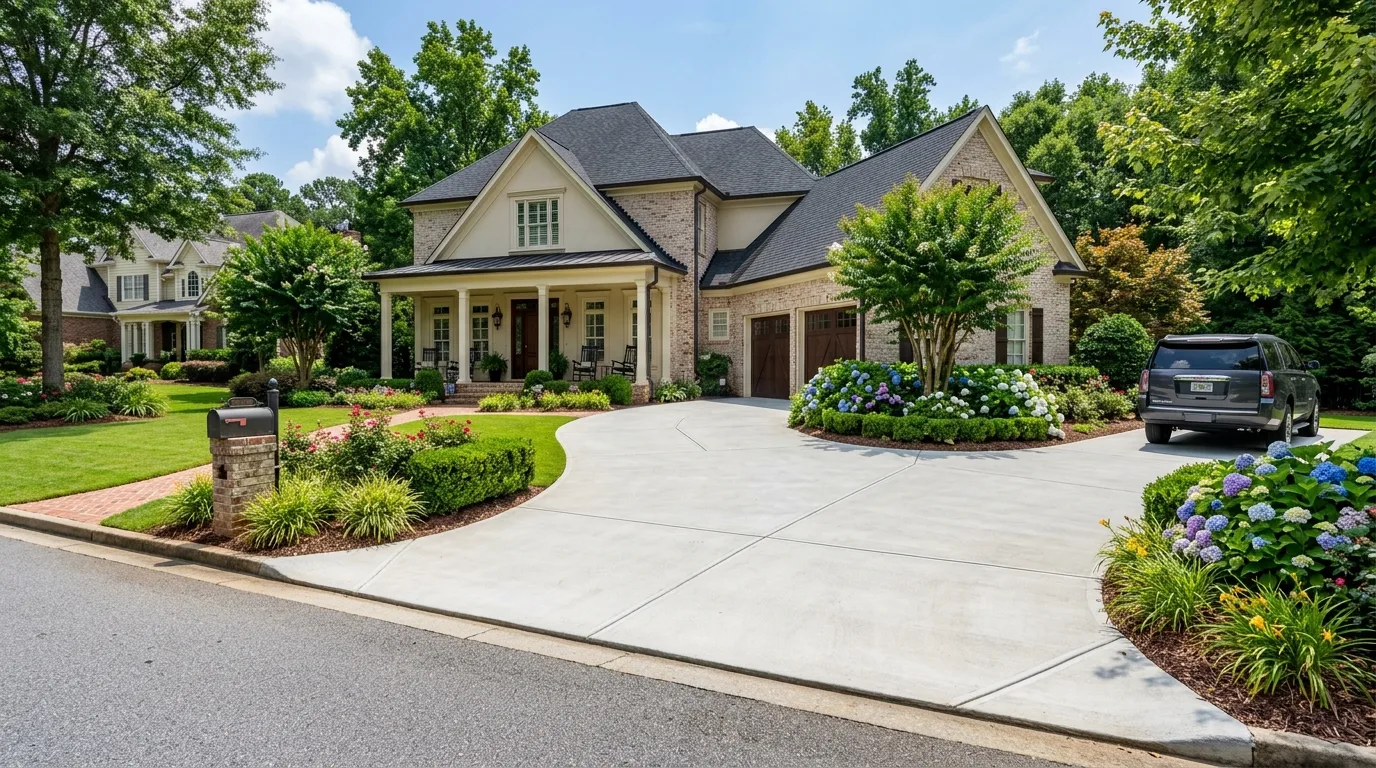
At some point, nearly every Spring, TX homeowner replacing a driveway asks the same question: concrete or asphalt? Both are widely used in the Houston area. Both last for decades with proper installation. But they handle the specific conditions of Spring — the clay soils, the summer heat, the annual rainfall — very differently. This guide gives you a straightforward comparison so you can make an informed choice for your property.
In this post, we cover: upfront cost comparison, total lifetime cost, how each material performs in Spring’s climate, maintenance requirements for each, and the specific scenarios where each material has a real advantage.
Comparing Driveway Options for Your Spring, TX Home?
Spring Concrete Pros provides honest comparisons and free concrete driveway estimates. Call (888) 376-0955.
The Short Answer
For most Spring, TX homeowners replacing a residential driveway, concrete is the better long-term choice. Texas’s summer heat is the primary reason: asphalt softens significantly at the 95°F+ temperatures that Spring experiences regularly from June through August, causing rutting under vehicle tires and tracking onto shoes. Concrete remains hard and stable regardless of summer temperature. The upfront cost premium for concrete pays for itself over the driveway’s service life.
That said, asphalt has legitimate advantages in specific situations. The full comparison follows.
Upfront Cost Comparison in Spring, TX
| Material | Cost Per Sq Ft | 400 Sq Ft Driveway |
|---|---|---|
| Asphalt | $3–$5 | $1,200–$2,000 |
| Concrete (broom finish) | $6–$8 | $2,400–$3,200 |
| Concrete (stamped) | $9–$12 | $3,600–$4,800 |
Subgrade preparation costs apply to both materials in Spring’s clay soil environment.
Asphalt is cheaper upfront — that’s real and meaningful. The $1,200–$1,200 difference on a 400 sq ft driveway is a real budget consideration. The question is what that money buys you over 20–30 years.
20-Year Lifetime Cost Comparison
Concrete and asphalt have different maintenance profiles over time, and this is where the comparison shifts significantly:
Concrete maintenance costs (20-year estimate):
- Sealing (every 3–5 years): $0.50–$1.00/sq ft × 4–6 applications = $800–$2,400 for 400 sq ft
- Crack repair (as needed): $200–$600 typical over 20 years
- Total maintenance: $1,000–$3,000
Asphalt maintenance costs (20-year estimate):
- Sealcoating (every 3–5 years): $0.15–$0.25/sq ft × 5–7 applications
- Crack filling (annually to every few years): $100–$300 per application
- Resurfacing (typically at 15–20 years): $3–$4/sq ft = $1,200–$1,600 for 400 sq ft
- Total maintenance: $2,500–$4,500
Concrete requires maintenance, but asphalt requires more maintenance more frequently. Over 20 years, the total cost of ownership often favors concrete despite the higher initial price.
How Texas Heat Affects Each Material
This is the critical comparison point for Spring homeowners:
Asphalt in Texas summer heat: Asphalt is a petroleum-based product with a glass transition temperature — the point at which it begins to soften — that can be exceeded during Peak Spring summer temperatures. At 95°F air temperature with direct sun, the asphalt surface temperature can reach 140–160°F. At these temperatures, asphalt softens visibly: tires leave marks, high-heel shoes puncture the surface, and parked vehicles can sink slightly into the material near the edges. This is not theoretical — Houston-area homeowners experience this regularly.
The severity depends on mix design (polymer-modified asphalt is more heat-resistant than standard), but the fundamental limitation of petroleum-based asphalt in extreme heat is real.
Concrete in Texas summer heat: Concrete does not soften in heat. It expands slightly with temperature increases (one reason control joints are essential), but remains structurally rigid at any temperature a vehicle tire would encounter. A concrete driveway in Spring performs identically in August at 95°F as it does in February at 50°F. This is a genuine performance advantage in the Texas climate.
How Harris County’s Clay Soil Affects Each Material
Both materials require proper subgrade preparation in Spring’s clay soil environment. The lime stabilization process is relevant to both:
Concrete on clay: As described throughout our site, concrete on unstabilized clay subgrade will crack and heave as the clay moves with seasonal moisture changes. Lime stabilization prevents most of this movement.
Asphalt on clay: Asphalt is more flexible than concrete and can tolerate some subgrade movement without cracking. However, it also allows more water infiltration through cracks and joints, which accelerates the clay’s shrink-swell cycle beneath it. Over time, asphalt on active clay subgrade develops the same heaving and settling problems as concrete, plus the added problem of the flexible surface conforming to and amplifying the subgrade deformation.
Neither material is immune to Spring’s clay soils — both benefit significantly from proper subgrade preparation.
Maintenance Comparison
Concrete maintenance:
- Sealing every 3–5 years protects against surface scaling and UV damage
- Crack filling when needed to prevent water infiltration
- Relatively low-maintenance between seal cycles
- Does not require annual attention
Asphalt maintenance:
- Sealcoating every 3–5 years is essential to prevent surface oxidation
- Crack sealing every 1–2 years as cracks appear (asphalt cracks more readily than concrete in hot weather as it becomes brittle with age)
- Resurfacing (overlay or complete replacement) typically needed at 15–20 years
- More frequent attention required throughout its service life
When to Choose Asphalt Over Concrete
Asphalt is the better choice in these situations:
Budget constraints: If the concrete premium isn’t feasible and you need a driveway now, asphalt is a legitimate choice that will serve you adequately for 15–20 years with proper maintenance.
Immediate needs in a for-sale home: If you’re selling and just need a presentable driveway, asphalt’s lower cost may make sense — the long-term maintenance profile doesn’t affect your decision.
Very long driveways: For rural or estate properties with driveways over 200 linear feet, the cost differential between asphalt and concrete becomes significant. Asphalt may be the practical choice for very long runs.
Frequently Asked Questions
Is asphalt or concrete better for a driveway in Texas?
For Spring, TX specifically, concrete is generally the better choice because it doesn’t soften in summer heat — a real and regular problem with asphalt in Harris County’s climate. Concrete also has lower total lifetime maintenance cost for most homeowners. Asphalt is a viable option if budget is the primary constraint.
Which lasts longer — concrete or asphalt?
Properly installed concrete in Texas lasts 30–50 years. Asphalt lasts 15–25 years before resurfacing is typically needed. Concrete’s longer service life is one of its primary advantages for homeowners planning to stay in their Spring home long-term.
Does concrete or asphalt add more value to a home in Spring, TX?
Concrete typically adds more value than asphalt in the Spring residential market because it’s perceived as the premium, longer-lasting option. In established Spring communities like Gleannloch Farms and Benders Landing, concrete driveways are the standard — asphalt may be viewed as a downgrade from a prospective buyer’s perspective.
Spring Concrete Pros — Concrete Driveway Specialists in Harris County
Get a free concrete driveway estimate with full spec documentation. (888) 376-0955 — we serve Spring, The Woodlands, Conroe, and all of Harris County.
Related reading: