
Best Time to Pour Concrete in Spring, TX: A Seasonal Guide
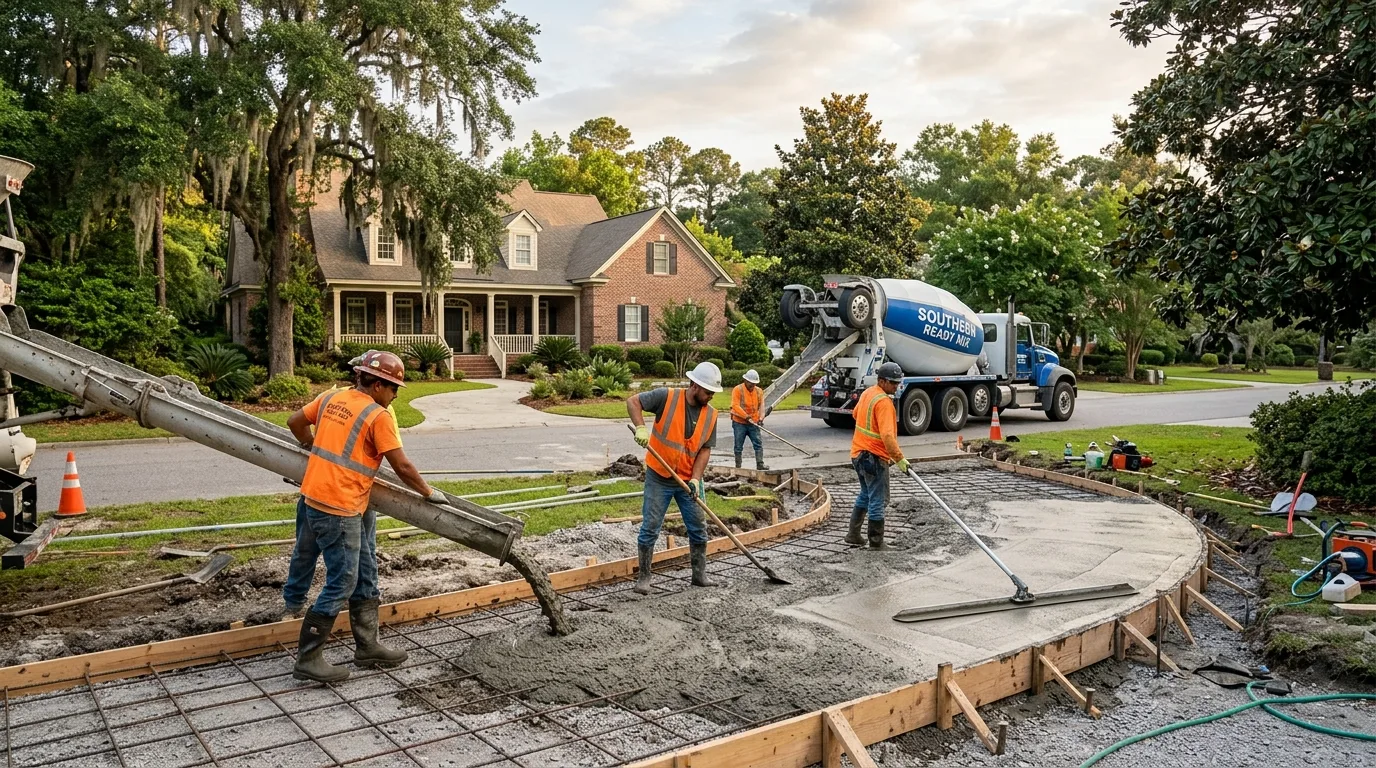
Concrete curing is a chemical process, not just drying — and temperature, humidity, and sunlight all affect whether that process produces a strong, durable slab or one that looks fine initially but develops surface problems within a few years. In Spring, TX, where August averages top out near 95°F and annual rainfall averages 50 inches, timing your concrete project correctly matters more than it does in many other parts of the country.
In this post, we cover: the ideal seasonal windows for concrete pours in Spring, what makes summer work challenging, how to successfully schedule a summer pour if you can’t wait, and what to expect from winter concrete work in Harris County.
Scheduling a Concrete Project in Spring, TX?
Spring Concrete Pros helps you pick the right timing and manages every curing challenge. Call (888) 376-0955 for a free estimate.
Why Timing Matters for Concrete in Spring, TX
Fresh concrete doesn’t dry — it hydrates. The cement particles react chemically with water in a process called hydration, gradually forming the crystalline structure that gives concrete its strength. This reaction works best between 50°F and 90°F. Below 40°F, hydration slows dramatically or stops, leaving concrete weak. Above 95°F, moisture evaporates from the surface faster than the cement can use it, causing plastic shrinkage cracks — surface cracks that appear before the concrete even fully sets.
Spring’s humid subtropical climate creates the full range of these challenges across the calendar year. Understanding each season helps homeowners schedule smarter.
Fall (September–November): The Best Window
Fall is the single best season for concrete work in Spring, TX. Temperatures drop from summer peaks to a more manageable 65–80°F range, humidity decreases from its August high, and the weather stabilizes. September through November typically delivers the combination of conditions that concrete likes best: consistent temperatures, moderate humidity that slows surface evaporation without creating excess moisture, and predictable weather patterns.
In practical terms, fall concrete in Spring cures more evenly across the full slab depth, finishing crews have more working time before the surface stiffens (reducing the risk of overworking), and stamped concrete projects have a wider stamping window — important for consistent pattern quality. Properties near the Spring Creek Greenway or in Gleannloch Farms that schedule decorative concrete work in fall typically see better color consistency and pattern detail than summer pours of similar designs.
If you have flexibility in your project schedule, September–October is the time to aim for.
Spring (March–May): Nearly as Good
Spring — the season — is an excellent time for concrete work in Spring, TX. Temperatures are climbing from winter lows toward summer highs, typically sitting in the 60–80°F range through May. Rainfall is more frequent than fall, which means a small risk of rain interrupting a fresh pour, but temperatures and humidity are well within ideal ranges.
The main consideration for spring scheduling is advance booking. Spring is the most popular season for concrete projects, and quality contractors in the Spring and Harris County market book out quickly. If you plan to install a driveway or patio in March–May, contact your contractor in December–January to get on the schedule.
Summer (June–August): Possible but Demanding
Summer concrete work in Spring requires specific techniques to produce quality results. The challenge is threefold: ambient temperatures regularly exceed 90°F by 10am, direct Texas sun heats the slab surface faster than the ambient temperature suggests, and humidity — while high — doesn’t prevent evaporation at these temperatures.
When surface moisture evaporates faster than the cement hydration can compensate, plastic shrinkage cracking occurs across the surface of the fresh concrete. These cracks may appear within hours of the pour and are very difficult to eliminate once formed.
Experienced Spring-area contractors manage summer concrete through several techniques:
Early morning pours: Scheduling the pour for 6–7am means the concrete is placed, finished, and under curing compound before the worst midday heat arrives. A slab poured at 6am has typically hardened to a safe level by noon.
Evaporation retardants: A spray-applied monomolecular film retardant slows surface moisture loss during the critical window between screeding and final finishing. This is standard practice for summer concrete in the Spring area.
Chilled mixing water or ice: For large pours, some contractors use ice to reduce the concrete mix temperature, slowing the setting rate and providing more working time.
Wet curing: Applying wet burlap or curing blankets immediately after finishing and keeping them moist for 7 days is especially important in summer to prevent the rapid drying that reduces surface strength.
Summer work adds cost (early crew mobilization, additional materials) and complexity. It’s successfully done every day throughout the Spring area — but it requires a contractor who manages these details actively.
Winter (December–February): Manageable with Preparation
Winter concrete work in Spring, TX is generally feasible. Harris County rarely sees temperatures below 40°F for sustained periods — the climate is mild enough that most winter days stay well within the acceptable curing range. Historical data shows only 6–10 days per typical winter where overnight temperatures approach the 40°F threshold that requires active cold-weather concrete protection.
When cold snaps are forecast, experienced contractors use:
Accelerator admixtures: Cold-weather concrete accelerators (calcium chloride or non-chloride alternatives) speed the hydration reaction, allowing the concrete to gain strength faster at lower temperatures.
Insulating blankets: After finishing, the slab is covered with insulating blankets to retain the heat of hydration and maintain surface temperature above 50°F.
Forecast monitoring: Experienced contractors watch weather forecasts closely and avoid scheduling pours when overnight temperatures below 35°F are within 24 hours of the pour.
Winter is actually a good time to schedule concrete in Spring for homeowners who are flexible. Contractor availability is better than fall or spring, prices may be slightly lower, and for standard residential work, the weather risk is modest.
Practical Scheduling Guidance
For homeowners planning concrete projects in Spring, TX:
- Optimal windows: September–November and March–May
- Proceed with management: June–August (early morning pours, evaporation retardants required)
- Feasible with monitoring: December–February (cold-weather admixtures on hand, blankets ready)
- Book in advance: Fall and spring projects fill up 8–12 weeks out with quality contractors
Frequently Asked Questions
Can you pour concrete in the rain in Spring, TX?
Fresh concrete and rain are incompatible. Rain falling on a fresh pour before the surface has set will dilute the cement paste at the surface, causing a soft, chalky surface layer that deteriorates quickly. We monitor short-term weather forecasts closely before every pour and reschedule if precipitation is forecast within 12 hours of the planned pour time. A concrete pour started in good conditions can typically survive light rain 4–6 hours in, but direct exposure while the surface is still plastic is a problem.
Does Spring’s high humidity affect concrete curing?
Humidity actually helps concrete during the curing process — it slows surface evaporation and reduces the risk of plastic shrinkage cracking. The challenge in Spring is summer heat paired with humidity: even at 70% relative humidity, 95°F air temperature drives rapid surface evaporation that overwhelms the humidity benefit. So high humidity alone isn’t a problem; high heat plus humidity requires active evaporation management.
How long after pouring can I drive on my concrete driveway in Spring?
Light foot traffic: 24 hours. Passenger vehicles: 7 days minimum. We recommend 10–14 days for consistent daily use and 28 days for heavy vehicles (trucks, equipment). These timelines assume proper curing — both the chemistry and temperature management. A summer pour with excellent wet curing typically reaches the 7-day threshold right on schedule; a winter pour with cold weather may take 10–14 days to reach the same strength.
Ready to Schedule Your Spring, TX Concrete Project?
Spring Concrete Pros schedules pours for optimal weather windows and manages every curing detail. Call (888) 376-0955 — free estimates.
Related reading: