
Old Town Spring Concrete: Restoring Historic Properties With Care
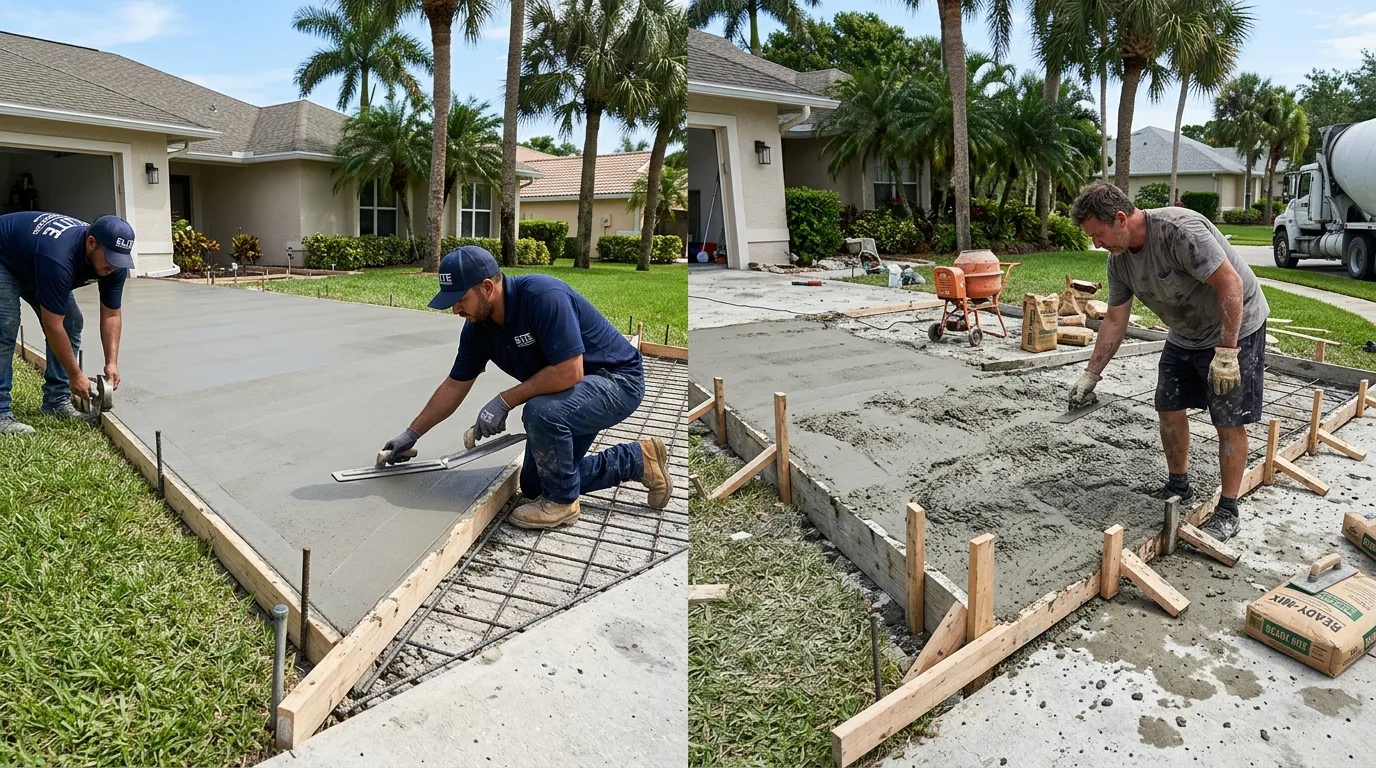
Old Town Spring sits at the intersection of Spring-Cypress Road and Hardy Road — the historic heart of what was once a railroad town, now a destination for antique shops, restaurants, and local boutiques that draw visitors from across the Houston metro. The buildings and walkways in this district carry the character of an older Texas town, and maintaining that character while addressing the very real concrete infrastructure challenges that come with aging structures and Harris County’s unforgiving clay soils is a specific challenge.
In this post, we cover: the concrete challenges unique to Old Town Spring properties, how historic aesthetics can be preserved in repair and restoration work, what concrete restoration actually involves for older structures, and the considerations that make this district’s concrete work different from a standard residential pour.
Historic Property or Commercial Concrete in Spring, TX?
Spring Concrete Pros handles concrete restoration and repair throughout Spring and Harris County. Call (888) 376-0955.
Why Old Town Spring Has Specific Concrete Challenges
Old Town Spring’s built environment reflects several decades of development — meaning much of the concrete infrastructure in and around the district was installed before modern best practices for clay soil subgrade preparation were standard. Walkways, entry paths, parking areas, and building approaches throughout the district show the characteristic damage pattern of Harris County’s expansive Beaumont clay: lifted sections, joint stepping, cracking along control joint lines, and edge deterioration from seasonal moisture variation.
The added complexity in a historic commercial district is aesthetic: the concrete in Old Town Spring isn’t just infrastructure — it’s part of the character and experience of the place. Replacing a cracked walkway with standard gray broom-finish concrete that doesn’t match the existing texture, color, or character can look worse than the crack it replaced. Restoration work in this area requires attention to aesthetic continuity that standard residential projects don’t demand.
The district also deals with tree root pressure more actively than most Spring neighborhoods. Mature trees — the established oaks and pecans that give Old Town Spring its shade and character — have root systems that extend well beyond their canopies, running beneath walkways and parking areas and drawing soil moisture unevenly. This root-driven moisture depletion is a significant cause of the differential settlement visible throughout the district’s older concrete surfaces.
Concrete Restoration vs. Replacement in Historic Contexts
For properties in and around Old Town Spring, the repair-vs.-replacement question carries aesthetic stakes beyond the structural considerations:
When restoration is appropriate:
- Slabs that are structurally sound but show surface spalling, scaling, or discoloration from weathering
- Sections with moderate cracking that don’t extend to full-depth fractures
- Areas where replacement concrete would create a color and texture mismatch with surrounding historic surfaces
Resurfacing overlays — thin polymer-modified concrete applied to an existing slab — can restore surface appearance and provide additional protection without full replacement. Color-matched overlays and textures can be applied that closely match the existing surface character, preserving aesthetic continuity.
When replacement is the right approach:
- Sections with significant differential settlement that creates trip hazards (a safety and liability concern for commercial properties)
- Full-depth cracking with void formation beneath the slab
- Areas where clay soil movement has made the existing slab structurally unsound
When replacement is required on a historic property, stamped concrete or textured finishes that replicate the character of the existing surface are available. Aged or weathered finish options, antique release agent colors, and custom patterns can be designed to harmonize with rather than contrast against existing surfaces.
Concrete Repair Considerations for Commercial Properties
Commercial properties in Old Town Spring face concrete challenges that residential sites don’t:
Traffic loading: Retail and restaurant properties experience pedestrian traffic far more concentrated than a residential driveway. Walkway sections with step-off heights at settled joints become immediate liability concerns. Commercial property managers need a faster response to concrete hazards than most homeowners.
Business disruption: Concrete replacement and repair in active commercial areas requires phased work that keeps portions of the facility accessible. A phased approach — replacing one section at a time while maintaining access elsewhere — is standard for commercial work in active districts.
Drainage and ADA compliance: Commercial properties are subject to ADA accessibility requirements for walkways and approaches. Deteriorated concrete that creates barriers to accessible access may need to be addressed regardless of aesthetic concerns.
Matching existing aesthetics: More so than residential work, commercial property repair in Old Town Spring benefits from close attention to the existing surface character. Broom directions, aggregate type, and color tones in the existing concrete are worth matching when making repairs in high-visibility areas.
Tree Root and Soil Management Near Historic Properties
The mature tree canopy that defines Old Town Spring’s character also drives its most persistent concrete problem. Root systems from established trees draw soil moisture unevenly — creating dry zones beneath concrete sections on the tree side while the non-tree side maintains relatively stable moisture. The resulting differential settlement is gradual and progressive.
Managing this dynamic for historic properties requires a combination of:
Root barriers: When replacing or installing concrete near established trees, physical root barriers can be installed to prevent roots from growing beneath the new slab while still maintaining tree health.
Structural expansion joints: Concrete installed near trees should include extra-wide expansion joints or be designed to allow movement without damage, since some root-driven subgrade variation is unavoidable near mature trees.
Drainage management: Ensuring that irrigation and surface drainage doesn’t create a moisture gradient that increases root activity toward the concrete helps stabilize the soil moisture under the slab.
Frequently Asked Questions
Can concrete be matched to existing historic surfaces in Old Town Spring?
Closely, yes. Modern decorative concrete techniques can replicate aged textures, specific aggregate appearances, and color tones through a combination of color hardeners, overlays, and finishing methods. A perfect match to weathered concrete that’s been in place for 30 years isn’t achievable, but a harmonious match that doesn’t create visual discontinuity is a realistic goal for skilled decorative concrete work.
How do you handle concrete repair in active commercial areas?
Phased work that maintains pedestrian access to adjacent portions of the property throughout the project. This typically means repairing half the walkway length at a time, allowing it to cure before moving to the next section. Emergency repairs for trip hazards can often be completed within 1–2 days with traffic accommodation. We assess the best phasing approach during the estimate for every commercial project.
Are tree roots the main cause of lifted concrete in Old Town Spring?
Tree root moisture depletion is a significant contributor in the district, combined with Harris County’s naturally active Beaumont clay soils. Root barriers at the time of installation are the most effective prevention. For existing concrete that’s already been lifted, addressing the underlying cause (drainage, soil moisture management near trees) alongside the structural repair is what prevents the next repair from facing the same problem.
Historic and Commercial Concrete Repair in Spring, TX
Spring Concrete Pros handles concrete restoration for historic and commercial properties throughout Spring and Harris County. Call (888) 376-0955.
Related reading: